
Know Everything About Shoulder Replacement Surgery in Jaipur

The shoulder is known to be the strongest as it carries responsibilities on it! But is your shoulder really strong, or do you have terrible pain in your shoulders and cannot carry out your daily tasks? If you have severe pain in your shoulder that is not allowing you to lead an everyday life, don’t worry, we have a solution for you! You might be excited to know about the solution, isn’t it? We won’t keep you in suspense! The solution to getting rid of shoulder pain and improving your mobility is none other than ‘Shoulder Replacement’! Are you wondering what shoulder replacement is? Then keep reading this article. This article answers all your questions related to shoulder replacement. So, what are you waiting for? Let’s begin the journey of awareness! First, let us understand what exactly a shoulder replacement is? A shoulder replacement is a treatment that helps treat shoulder pain and improves mobility by replacing damaged parts of the shoulder joint with artificial components called a prosthesis. Dr. Dilip Mehta, the best orthopedic doctor in Jaipur, uses shoulder replacement surgery to treat rheumatoid arthritis, rotator cuff tear arthropathy, osteoarthritis, etc. Dr. Dilip Mehta has performed many successful shoulder replacement surgeries and is one of the leading orthopedic surgeons in Jaipur. He says, “Shoulder replacement surgery is prevalent and a widely used treatment option to get relief from shoulder pain and improve one’s mobility and function. It is performed using artificial components called a prosthesis.” What is the prosthesis made of? The prosthesis is made of a special kind of stainless steel attached to a stem made of titanium and keeps the ball attached to the arm. A polyethylene cup is used to replace the glenoid socket. What is the importance of shoulder replacement surgery? Why is it performed? Shoulder replacement surgery is performed to relieve one from shoulder pain and treat joint dysfunction caused by conditions such as rheumatoid arthritis, rotator cuff tear arthropathy, osteoarthritis, etc. Shoulder replacement surgery is a suitable option for you if you experience the below symptoms- Can you relate yourself to any of the above conditions? Then visit Dr. Dilip Mehta, the experienced orthopedic doctor in Jaipur right now! He may evaluate your condition and decide the most appropriate type of shoulder replacement for you. What are the different types of shoulder replacements? The different types of shoulder replacement are as follows- Source-kneeandshoulder.net The orthopedic surgeon will discuss each type and its procedure in detail with you and decide the most suitable one for you, depending on your condition. Now let’s discuss, What can one expect at the initial visit for shoulder replacement surgery? At the first visit, your orthopedic doctor in Jaipur will perform physical examinations X-rays and ask about your medical history. This will help the doctor evaluate your condition and decide how to go about the procedure. How can one get ready for the procedure? The orthopedic surgeon in Jaipur might recommend specific physical tests and blood tests for physical preparedness. This will help the doctor determine whether you are eligible to undergo surgery or not. Dr. Dilip Mehta may also ask you to discontinue certain medications before the surgery. It is advisable to wear loose clothes when going for surgery. What happens during the procedure? Source-youtube.com The shoulder replacement surgery goes on for about two hours. It is performed using general anesthesia to make you unconscious during the procedure. The orthopedic surgeon replaces damaged parts of the shoulder joint with prostheses during the surgery. The surgeon also places a plastic surface on the shoulder’s socket, known as the glenoid. What happens after the procedure? After the procedure, you will be taken to a recovery room for some hours, and when you gain consciousness, you will be taken to a hospital room. After the procedure, you might experience pain, and so your doctor might give you pain medications by injection after the procedure. After 1-2 days post-surgery, the orthopedic doctor may prescribe some oral medicines to relieve the pain and discomfort. The rehabilitation usually begins right after the surgery. You will remain in the hospital for a few days and get discharged when you feel better. At the time of discharge, your arm will be in a sling that needs to be worn for around two to four weeks. Some post-operative guidelines that need to be followed How long does it take to recover from the surgery? The recovery duration may vary from person to person, depending on the type of surgery one had. Most people can perform gentle daily activities within 2-6weeks. It might take around six months for you to resume more vigorous activities, such as swimming and golfing. Performing exercises regularly as instructed by your healthcare provider can significantly help in speeding up your recovery. What are the benefits of shoulder replacement surgery? Shoulder replacement surgery provides various benefits, such as it helps in getting rid of the terrible shoulder pain and leads to improved function and motion. What are the risks associated with shoulder replacement surgery? Though rare, some of the risks associated with shoulder replacement surgery include the following- But don’t worry! You can avoid the risks by getting shoulder replacement surgery done by a proficient orthopedic doctor in Jaipur like Dr. Dilip Mehta. And so, with this, the awareness journey comes to an end! So, now as you have completed the awareness journey, it is time to begin the shoulder replacement treatment journey! So, what are you waiting for? Visit Dr. Dilip Mehta, a renowned and experienced orthopedic surgeon in Jaipur right now, to begin the shoulder replacement treatment journey and end your terrible shoulder pain! And don’t worry! If you face any problems, reach out to Dr. Dilip Mehta. He is always there to help you overcome all the obstacles faced during the treatment journey, thus ensuring you have a smooth treatment journey! Now is the time to defeat the obstacle called shoulder pain that stops you from doing the activities you love doing! Now is the time to live
Common Sports-Related Ligament Injuries

Injuries in sports may be devastating – not only physically but also mentally, because they might cut a player’s career short. Ligament injuries can occur in any high-intensity sport that necessitates pivoting and sprinting. They usually affect the knees and ankles, although they can also affect the neck, shoulder, back, thumb, and wrist. You should visit a doctor immediately if your injury has severe bruising, swelling, or obvious deformity. Dr. Dilip Mehta, an experienced orthopedic surgeon in Jaipur, has an excellent track record of treating sports-related ligament injuries. He is exceptionally well-versed in advanced arthroscopic surgeries and complex ligament reconstruction. He is the Director and HOD at Indus Hospital, Jaipur. Dr. Dilip Mehta is listed among the best orthopedic doctor in Jaipur for comprehensive arthritis and knee replacement treatment. Let’s start with what is ligament injury? Ligaments are strong, flexible fibrous tissue cords that join bones, control movement, and support the joints. Despite the fact that ligaments are quite strong, a strain injury can happen due to a sudden stretch or twist. Ligament tear is the most severe ligament injury. Most of us are confused between strain and sprain injury. Though the symptoms may be the same, they are injuries to separate parts of the tissues in a joint. Sprains occur when a ligament is stretched or torn. Strains are a pull, twist, or tear of a tendon or muscle, often known as soft tissue injuries. Tendons are tissue cords that connect bones to muscles. It is necessary for people playing sports regularly to be aware of the common sports-related ligament injuries. Knee ligament injury Image Source: https://www.knee-pain-explained.com/knee-ligaments.html The bones of the knee are held together by four ligaments. Tears in the LCL or MCL A sprain or tear of the outer or inner side of knee ligaments is an LCL or MCL injury. It commonly happens as a result of a knee injury sustained while participating in a strenuous sport, such as skiing. Generally, these types of injuries heal without surgical intervention. Tear in the ACL An ACL injury is ligament damage on the inside of the knee, which is frequent in football, and basketball. The injury can range from a minor sprain to a complete ligament tear. ACL tears often necessitate surgery. Dr. Dilip Mehta is one of the best orthopedic surgeon in Jaipur for ACL repair. He is an expert in minimally invasive surgery. Tear in the PCL Among all the knee ligament injuries, PCL is the least common, and it is most likely caused by a fall on the knee or direct trauma. The majority of PCL injuries do not require surgery. Ankle Sprain Image Source: https://pittmanpt.com/ankle-ligament-sprain/ An ankle sprain, which is a prevalent sports injury, causes a micro tear, stretch, or total tear to the outer ligaments of the ankle. Shoulder ligament injury Image Source: https://www.howardluksmd.com/shoulder-pain-rotator-cuff-injuries/ Dislocations of the ball and socket joint usually harm the shoulder ligaments. These are generally severe injuries that need immediate medical attention to put the joint back into place. A shoulder separation entails ripping the ligaments that hold the Acromioclavicular Joint (ACJ), which is located on the outside of the collar bone. In case of shoulder injury, you can visit Dr. Dilip Mehta, an orthopedic doctor in Jaipur. He has extensive training and experience in Advanced Shoulder Arthroscopy and Revision Arthroplasty and Arthroscopy. Elbow ligament injury Image Source: https://www.hopkinsmedicine.org/health/conditions-and-diseases/ulnar-collateral-ligament-ucl-injuries-of-the-elbow The most common injury to the elbow is the Ulnar Collateral Ligament (UCL). The UCL, located on the inside of the elbow, can be either sprained or torn partially, or totally. It occurs due to excessive pitching, like in baseball, and can be acute or chronic. Falls and activities like wrestling can cause traumatic tears. Thumb ligament injury Image Source: https://orthoinfo.aaos.org/en/diseases–conditions/sprained-thumb A gamekeeper’s thumb is a common thumb ligament injury. The ligament between the base of the thumb and the wrist bones tears in this injury. It generally happens when you are holding something in your hand during a fall, such as a bike’s handlebars or ski pole. Symptoms of ligament injury Symptoms of a torn ligament vary depending on the severity of the injury but may include: Ligament injuries can be extremely painful, so it is best to get medical help immediately. You can contact Dr. Dilip Mehta, a prominent orthopedic surgeon in Jaipur, who will assess your injuries and recommend the best course of treatment. What are the treatments for ligament injury? Non-surgical therapy options include the R.I.C.E. approach (Rest, Ice, Compression, and Elevation) and anti-inflammatory medications for mild ligament injuries. The doctor may recommend a splint or brace for protection and comfort. You may also need physical therapy. Surgical Intervention A surgical approach to repair a ligament may be required in the case of a major tear or strain. Ligament surgery may involve repairing or replacing the ligament with a tendon graft to keep the injured joint together. You will need physical therapy are surgery. After a surgical repair of a ruptured ligament, rehabilitation and restoration to full function can take 6-9 months. Dr. Dilip Mehta, a sports medicine expert and orthopedic surgeon in Jaipur, can help you recover from sports-related ligament injuries quickly and safely. He practices at 360° Knee Clinic in Vaishali Nagar, Jaipur.
Knee Ligament Repair in Jaipur
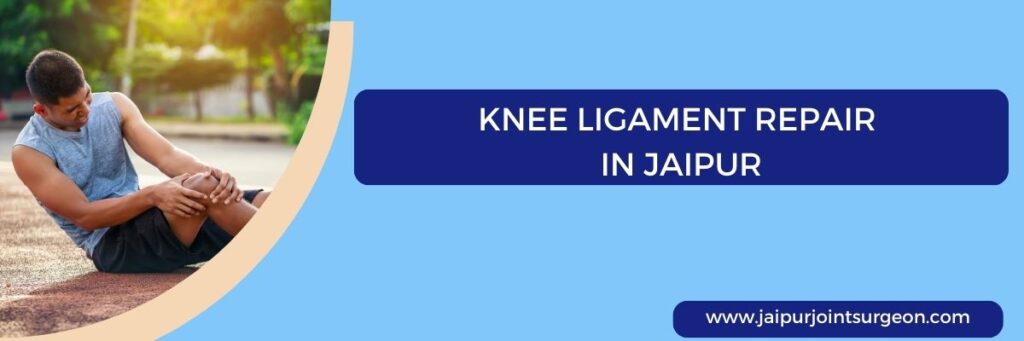
We all scrape our knees once in a while, and it typically heals with a band-aid. But what happens if you tear a ligament and any pressure or weight on the knee joint causes severe pain? The knee joint is among the toughest and most important joints in your body. It supports the body’s weight and plays an essential role in the movement of your legs. Many daily activities, such as walking, jogging, sitting, and standing, require movement at the knee joint. If a knee injury hinders you from your routine, please contact Dr. Dilip Mehta. He is one of the best orthopedic doctors in Jaipur. Read on to know about knee ligament repair and why you might need it. What are knee ligaments? Ligaments are strong, elastic bands of connective tissue surrounding your joint to support and limit its movement. Your knee joint can become weak and unstable if the ligaments are injured. A sports injury is a common cause of ligament damage. A damaged ligament can substantially restrict your knee movement. As a result, the leg is unable to turn or twist. If standard medications do not help, you will require the expertise of an orthopedic surgeon. The knee has four ligaments that are vulnerable to injury: ACL – The anterior cruciate ligament is the most often susceptible to damage. It links the thigh and shin (tibia) bones. PCL – The posterior cruciate ligament also connects the thigh and shin bones. It is injured in rare cases, like a car accident. LCL – The lateral collateral ligament is a ligament connecting the thigh bone to the fibula (also called the calf bone). MCL – Medial collateral ligament connects the thigh and shin bones in the inner side of the knee. How does a knee ligament injury feel? A knee ligament injury may cause: If you experience any of the above, visit Dr. Dilip Mehta, a highly skilled orthopedic doctor in Jaipur, for a diagnosis. He may take X-rays to check for any broken bones and MRI to rule out ligament injuries. What is the treatment for knee ligament injury? According to Dr. Dilip Mehta, minor to moderate injuries may heal on their own over time. You can speed up the healing process by doing the following: Rest your injured knee: Avoid putting weight on the knee; use crutches till it heals Apply ice: Use an ice pack (20 – 30 minutes) every few hours to reduce swelling and pain Use a Compression: Wrap your knee with an elastic bandage, sleeves, or straps to reduce swelling Use a knee brace: Protect and stabilize your knee by wearing a knee brace Elevate your knee: Rest your knee on a pillow while lying down or sitting Take pain killers: Anti-inflammatory pain relievers like aspirin and ibuprofen can aid with pain and swelling. Speak to your physician or pharmacist for directions or dosage Limit your activity: Do not indulge in stressful activities that strain your knee Follow doctor-recommended exercises: Practice strengthening and stretching exercises carefully without causing stress to your injury If the above procedures don’t help, speak with Dr. Dilip Mehta, among the best orthopedic surgeons in Jaipur, to determine if a knee ligament repair surgery will help you. Dr. Mehta is committed to providing caring, safe, and cost-effective treatment to his patients. What is a knee ligament repair surgery, and will I need it? Knee ligament repair is a procedure for treating a torn knee ligament that causes knee instability. A torn knee ligament can make it impossible for you to perform everyday tasks that require turning or twisting at the knee. It may cause your knee to buckle and make you fall. In a knee ligament repair surgery, the surgeon replaces the torn ligament with healthy tendons taken from another part of your leg or a donor. If the pain is not an issue, you may opt to avoid the operation and face the possibility of lifelong leg instability. You can discuss your treatment choices with Dr. Dilip Mehta, an eminent orthopedic surgeon in Jaipur. What is the recovery time post-surgery? You should be able to resume your previous level of activity between 6 weeks to 6 months. Your doctor may advise you to keep doing things like cycling and swimming, but not any tasks or sports involving a lot of turning, jumping, and twisting. The severity of your injuries will determine the length of your recovery. People heal at varying rates as well. It is crucial to strictly follow your surgeon’s post-surgery instructions for a smooth recovery. Conclusion It is critical to care for your knees starting early in life. The knee joint is among the most essential joints in the body since it allows you to walk, stand, and run while also bearing your body’s weight. Many people encounter knee difficulties at some point in their lives, which are generally preventable. It is a good idea to guard your knee from damage or harm by taking care during all your activities. If there is an accident involving your knee, waiting until it worsens is the worst thing you can possibly so. Do not delay; fix an appointment with Dr. Dilip Mehta, one of the most preferred orthopedic surgeons in Jaipur. He has over 15 years of experience in orthopedic surgery, including knee replacement, shoulder replacement, elbow replacement, hip replacement, and ankle replacement. Relevant Blogs Knee Replacement or Stem Cell Therapy: Which is the Right Choice? In this blog, we will explore stem cell therapy and knee replacement surgery in more detail, including the benefits, risks, and what to expect during recovery. Total Knee Replacement: Everything You Need to Know Total knee replacement (TKR) is a marvel of modern medicine in terms of alleviating joint pain and arthritis. In Jaipur, an increasing number of people are undergoing knee replacements to enable them to enjoy a more active and healthy lifestyle.
Arthritis and Hip Replacement Surgery in Jaipur
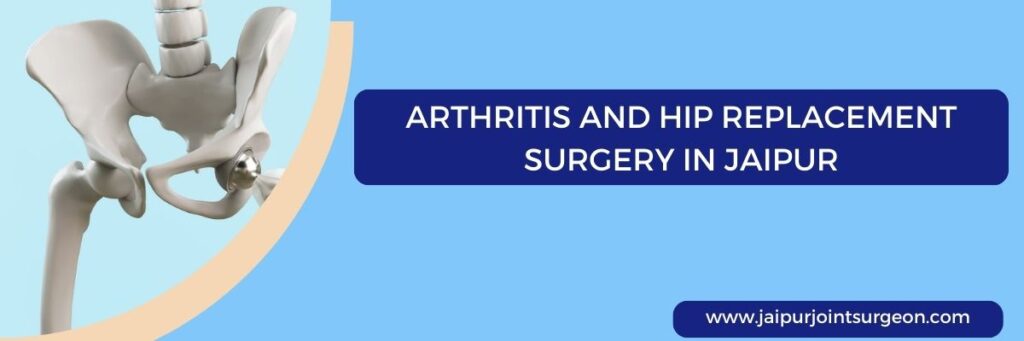
A weakening hip can make performing the things you enjoy difficult, if not impossible. The most common reason for hip replacement is the deterioration due to arthritis, when joints enlarge and become tender, causing stiffness and joint pain. If you suffer from hip stiffness and pain, hip replacement surgery may significantly improve your quality of life. It will alleviate your pain and enhance your mobility and capacity to function. Get in touch with Dr. Dilip Mehta, one of the best orthopedic surgeons in Jaipur, for a diagnosis. He will assess the severity of your problem to see if conservative treatments will suffice or if you need hip replacement surgery. What are the symptoms that I should look out for? Some of the indicators for a hip replacement surgery include: Persistent and severe pain: If your hip joint is damaged, it can cause you chronic and intense pain, not only in the hip region but in the area till your knee. You may experience the following: Difficulty doing daily tasks: When considering whether or not to have hip replacement surgery, the most crucial thing to consider is the extent to which the damaged hip is hurting your life. Even if the discomfort is manageable, substantial hip joint impairment can make even the most basic tasks incredibly difficult, such as: If you have any of the following symptoms, please visit Dr. Dilip Mehta, an eminent orthopedic doctor in Jaipur. He provides the highest level of compassionate, convenient, safe, and cost-effective treatment. What is a hip replacement surgery? Hip replacement surgery is a medical procedure done when conventional treatments have failed to provide pain relief. In this surgery, the orthopedic surgeon removes an arthritic hip joint and substitutes it with an artificial hip joint comprised of metal, plastic, or ceramic components. The operation should alleviate pain in the hip joint, allowing you to walk more easily. How is the hip replacement surgery performed? Your surgeon will give you a general anesthetic to relax and numb your muscles. It will put you into a deep sleep for the duration of the procedure. This will keep you from experiencing pain during the surgery. Your surgeon will do the following : Techniques for hip replacement are evolving all the time. Surgeons are continually developing less invasive surgical techniques to reduce pain and recovery time. What is the recovery time? You will probably spend 4 to 6 days in the hospital and have to sleep with a cushion placed between your legs so that the hip joint replacement stays in place. A drainage tube may be inserted into your bladder to help you relieve yourself. Physical therapy typically starts a day after surgery, and you should be able to walk using a walker, a cane, or crutches within a few days. You must continue physical therapy for several weeks to months after surgery. Post-surgery, please ensure that you sit in a chair with a solid, straight back. It is not advisable to sit on a recliner. Make use of a raised toilet seat to prevent you from bending your hips too far. Conclusion Arthritis causes inactivity, which results in a loss of muscular strength and increases hip joint stiffness. Weak hips and joint inflammation might cause a noticeable limp if you don’t get a hip replacement. Dr. Dilip Mehta, a highly skilled orthopedic surgeon in Jaipur, says that persistent joint pain not only limits your capacity to move but can harm your mental and emotional health. Even if you handle your degree of hip pain, coping with this symptom over time may cause mental health disorders. Studies have shown that chronic pain is linked to anxiety and depression. Delay in hip replacement might cause significant muscle loss, leading to a prolonged recovery time. If you or your loved one is suffering from severe pain and symptoms mentioned above, schedule an appointment with Dr. Dilip Mehta at the earliest. He is a top-notch orthopedic doctor in Jaipur with over 15 years of expertise.
Total Knee Replacement: Everything You Need to Know

Total knee replacement (TKR) is a wonder of contemporary medicine for relieving joint discomfort and arthritis. In Jaipur, more and more people are getting knee replacements to help them live a healthier and more active lifestyle. Dr. Dilip Mehta, the founder of 3600 Knee Clinic, is one of the best orthopedic doctor in Jaipur. The award-winning doctor specializes in joint replacement surgeries and arthroscopy surgeries. If you consider total knee replacement surgery, you should consult our highly experienced orthopedic surgeon in Jaipur, Dr. Dilip Mehta. He has performed thousands of surgeries with excellent results. However, before undergoing the procedure, it is important to have a fundamental understanding of it. Read on to know everything about total knee replacement. If your joints are causing you enough pain to make it difficult to carry out daily activities, your doctor may recommend knee arthroplasty, another term for total knee replacement. It can aid in the relief of pain and the restoration of function in severely damaged joints. The surgery involves cutting damaged cartilage and bone from your shinbone, thighbone, and kneecap and replacing it with a prosthesis consisting of metal alloys, polymers, and high-grade resins. First, Dr. Dilip Mehta, an orthopedic doctor in Jaipur, will evaluate your knee’s range of motion, strength, and stability to see if a knee replacement is correct for you. X-rays aid in the assessment of the damage. Then depending on your age, knee shape and size, weight, activity level, and overall health, he can help you choose the proper procedure from various knee replacement prostheses and surgical approaches. Why do people undergo knee replacement? Knee replacement surgery is most commonly performed to address severe discomfort caused by osteoarthritis. Walking, difficulty getting up, and climbing stairs are common challenges for those needing knee replacement surgery. Some even experience knee pain while they are at rest. Other reasons for undergoing knee surgery are: What happens after the procedure? Most patients remain in the hospital for 2 to 3 days following a total knee replacement. The orthopedic surgeon will prescribe pain relievers and keep an eye on you for any potential complications. A physical therapist will begin assisting you with the following shortly after your operation: You’ll have to keep doing these workouts at home. You will be eligible to return home after getting out of bed and using the restroom independently. After your surgery, you may need a walker or cane for some time. What is the result of total knee replacement? Knee replacement gives pain relief, increased agility, and improved physical well-being for the majority of people. In addition, most knee replacements last at least 15 years. Three to six weeks after surgery, you can begin normal tasks such as modest housekeeping. If you are comfortable bending your knees while sitting in a car and have adequate muscular control to use the accelerator and brakes, you can drive after 3-4 weeks. Following your recovery, you can engage in low-impact exercises like walking, biking, or swimming. Higher-impact hobbies, such as jogging and sports that require jumping, should be avoided. Are there any other options other than total knee replacement? According to Dr. Dilip Mehta, a prominent orthopedic doctor in Jaipur, this is the most common concern that all patients have before undergoing surgery. There are, however, certain solutions accessible as a substitute. Partial knee resurfacing Depending on the severity of your problem, resurfacing or partially replacing components of your arthritic knee may be a viable option for preserving a portion of your knee. It is a cutting-edge surgery that promises a faster recovery and better surgical outcome. It is reserved for individuals whose damage is limited to a single region of the knee and can be resurfaced without risking the surrounding healthy bone and tissue. Partial knee replacement Partial knee replacement (Unicompartmental arthroplasty) is another possibility. Instead of replacing the entire surface, a smaller implant is adjusted on just one side of the knee if the damage is limited to that region. Only if the knee joint is afflicted by arthritis and the other compartments have normal, healthy cartilage is a partial knee replacement performed. Dr. Dilip Mehta, a trusted orthopedic doctor in Jaipur, considers all the other options before recommending total knee replacement. For any queries or guidance regarding total knee replacement, you can schedule an appointment with one of the best orthopedic surgeon in Jaipur, Dr. Dilip Mehta.
Everything You Need to Know About Sports Injuries: Risks, Types, Diagnosis, Treatment, and Prevention

Younger people and children are prone to sports injuries. Often, children and teenagers are harmed due to organized sports or physical exercise. Sports are also responsible for one-third of all injuries ins youngsters. Sprains and strains are the most common sports injuries in children. Contact sports, such as football and basketball, cause more injuries than noncontact sports like swimming and jogging. If there are signs of swelling or putting weight on the affected area hurts, consult an orthopedic doctor in Jaipur right away. If the problem is in the same area as the previous injury, seek immediate medical attention. Dr. Dilip Mehta is one of the best orthopedic doctor in Jaipur. He has been diagnosing and treating sports injuries for over 15 years. Besides, he assists patients during their rehabilitation to ensure they heal swiftly and return to their routine. Continue reading this article to learn more about sports injuries, your treatment choices, and how to avoid them in the first place. First, let’s know, What are the Types of Sports Injuries? Symptoms and effects vary depending on the type of sports injury. The following are the most common sports injuries: Now, let’s discuss, How Are Sports Injuries Diagnosed? Many sports injuries result in immediate discomfort or pain. Others, such as injuries due to overexertion, may discover after long-term damage has occurred. During routine physical exams or check-ups, these injuries are frequently diagnosed. Dr. Dilip Mehta, one of the best orthopedic doctor in Jaipur, may employ the steps below to diagnose you if he suspects an injury. These are some of them: If you have a sprain or strain, the doctor may advise you to employ the RICE approach. How Are Sports Injuries Treated? Seek emergency medical attention if the injured joint shows signs of: Also, if you have any of the following symptoms after an injury, seek medical help right away: Surgery and physiotherapy may be required for severe sports injuries. You may plan a consultation with Dr. Dilip Mehta, a seasoned orthopedic surgeon in Jaipur if the injury does not heal within two weeks. How To Prevent Sports Injuries? Warming up and stretching are the most significant ways to avoid a sports injury. Overstretching and tears are common in cold muscles. Warm muscles are more flexible. Quick motions, bends, and jerks can be absorbed, reducing the risk of injury. Take the following precautions to avoid sports injuries: Learn how to move correctly throughout your sport or activity. Various sorts of exercise necessitate various stances and postures. For example, bending your knees at the appropriate time can help you avoid injuries to your spine or hips in some sports. Put on the appropriate footwear. Make sure you are wearing the right athletic gear. Incorrectly fitting shoes or equipment can put you in danger of injury. Resume sports only after full recovery. Don’t try to “push through” the discomfort. When you return to the activity or sport after allowing your body to recover, you may need to ease back into it rather than diving back in with the same intensity. After your activities, remember to chill down. This usually entails performing the same stretches and movements as a warmup. Don’t let your injury go untreated for too long. Excessive rest can lead to slow healing. Now, let’s know about, Risks of Sports Injuries Anyone can suffer a sports injury. However, some variables put you or a loved one at a higher risk of injury. Children are more vulnerable to sports injuries due to their energetic lifestyle. Children are sometimes unaware of their physical limitations. As a result, they may be more prone to injury than adults or teenagers. The older you get, the more likely you are to be injured. You are more likely to experience lingering sports injuries as you become older. New injuries may aggravate the prior injuries. Serious injuries can begin as minor ones. Many conditions resulting from over-exertion, such as tendinitis and stress fractures, can be detected. They can evolve into severe injuries if left untreated or ignored. Carrying excess weight puts undue strain on your joints, mainly your hips, knees, and ankles. When you work out or participate in sports, the pressure is amplified. This raises your chances of suffering a sports injury. A physical examination by your orthopedic doctor in Jaipur is recommended for children and adults who want to participate in sports. Follow the mentioned guidelines while keeping an eye on your symptoms. If they go worse, you may have a more severe sports injury. When it comes to a child’s sports injury, take extra measures. Children’s bones are weaker than adults’ because their skeleton has not fully formed. What appears to be a tissue injury could be a more severe fracture. Don’t ignore your signs and symptoms. Remember that the sooner you obtain a diagnosis and treatment, the faster you will be able to recuperate and get back into the game.
What is the Average Age for a Hip Replacement?
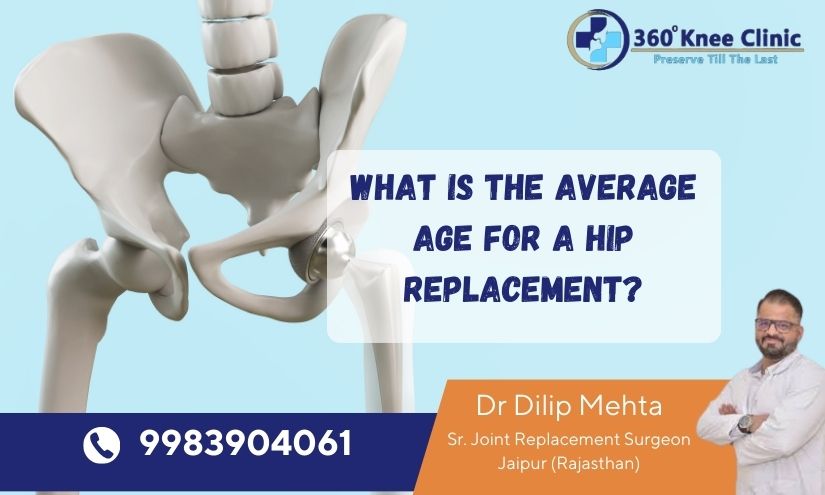
Average Age for a Hip Replacement: Hip replacement is a surgical procedure that people require when there is a problem with their joints. In general, the requirement to go for hip replacement surgery arises in old age when a person has reached his 60s. But sometimes, it happens that a person is in need of getting the surgery after experiencing any injury in the hip joint due to an accident or sports injury. Well, in this read, we are discussing the age criteria for a hip replacement surgery, and the doctor, you can approach for the surgery. First of all, do understand that Dr. Dilip Mehta is one of the best doctors you can approach for hip replacement surgery in Jaipur. Yes, you read it right. In Jaipur, you will be able to get the best treatment too at a very affordable price. He is among the top joint replacement surgeon you can get in touch with for treatment and get rid of the condition. Apart from it, let’s discuss the average age for a hip replacement! Average Age for a Hip Replacement: Hip replacements are a common surgery for older adults. This surgery is recommended for people who have certain conditions that make it difficult to walk, as well as those who have had hip fractures. The average age for a hip replacement is 63 years old. These are most often recommended if you have a history of arthritis in your hips or knees and also if you’ve had a previous hip fracture. However, the risk of surgery increases after age 70 due to increased health problems and comorbidities. If you are experiencing pain or limited mobility, you may need hip replacement surgery. The following symptoms can indicate that you need to have your hips replaced: How Long Should You Wait Before Getting A Hip Replacement? It is important to know what to expect before getting a hip replacement. There are also other factors that you should consider before deciding on the waiting period. In general, most doctors recommend waiting at least six months after joint replacement surgery. However, this could vary depending on how the surgery was performed and your health condition before the surgery. The waiting period for a hip replacement can vary depending on the severity of the injury and what type of surgery you need. The average waiting time is between 3-4 weeks. When is the right time to get a Hip Replacement? It’s best to get a hip replacement when you are experiencing pain that prevents you from doing your daily activities. You should also consider getting it if you are at risk of losing your mobility and independence as an older adult. How to Find Out If You’re Eligible for a Hip Replacement? If you’re wondering if you’re eligible for a hip replacement, there are several things to consider. Your age, the severity of your symptoms, how long the pain has been present, and how well your overall health is. If you’re unsure if you should be getting a hip replacement or not, it’s best to talk to your doctor about it. He or she can help you figure out which surgery is best for you and whether or not it’s an option for your body type and other factors. If a patient is eligible for a hip replacement, they have several options on where to get it done. These include hospitals and private clinics as well as online services that can provide the procedure at home. One way to find out if you’re eligible is by going to your doctor’s office or hospital. If they can’t tell you based on your medical history, then there are other options you can explore, such as getting an x-ray or MRI. This was all about the average age for hip replacement surgery. We hope right now there is no confusion you are having. In case there is anything additional you are having in your head, discuss it with your doctor. So that he can clarify your doubts and make you comfortable with the procedure as well! FAQ: Average Age for a Hip Replacement Q. 1 What is the average age for a hip replacement? Ans: Hip replacement surgery is a very common procedure in the United States. The average age for hip replacement is 66 years old. It’s important to know your options and what you can expect before scheduling this surgery. Q. 2 What are the leading causes of hip replacement? Ans: The leading causes of hip replacement are osteoarthritis, cancer, and trauma. Osteoarthritis is the most common cause of hip replacement and it affects about 10% of people over the age of 65. In recent years, more people have been opting for hip replacements as a way to alleviate pain from arthritis or other diseases such as osteoporosis or cancer. In addition, many people are choosing to replace their hips because they have had an injury or fall which has caused damage to their joints or hips. Q. 3 How long does it take to recover from a hip replacement? Ans: The recovery period can vary depending on the type of surgery, how much bone was removed, and other factors. It takes about six weeks to recover from a hip replacement. This is the time it takes for a person to start walking without pain and return to work. Q. 4 What are the risks of having a hip replacement? Ans: The risks associated with this surgery include infection, dislocation, and re-fracture.
Knee Replacement or Stem Cell Therapy: Which is the Right Choice?

Knee pain is a common problem that can affect people of all ages, whether it is due to an injury, degenerative conditions, or overuse. It can be debilitating and make it difficult to perform everyday activities, such as walking, climbing stairs, and even sitting down. When it comes to treating knee pain, there are several options available, including stem cell therapy and knee replacement surgery. Both of these treatments have the potential to provide significant pain relief and improved mobility for patients with knee problems Dr. Dilip Mehta, a leading orthopedic specialist in Jaipur, explains, “Stem cell therapy is a relatively new and developing field that uses a patient’s own stem cells to promote healing and regeneration of damaged tissue. It can be an effective option for patients with early-stage knee problems, such as mild arthritis or a small cartilage tear.” He adds, “On the other hand, knee replacement surgery is a more established treatment option that can provide significant pain relief and improved mobility for patients with severe knee arthritis or other conditions that have caused significant damage to the knee joint.” Dr. Dilip Mehta has more than 15 years of experience and has had the privilege to train and work at some of the most prestigious medical institutes in the world. You can consult him at 3600 Knee Clinic, one of the best orthopedic clinic in Jaipur. In this blog, we will explore stem cell therapy and knee replacement surgery in more detail, including the benefits, risks, and what to expect during recovery. We will also examine how to determine which treatment is best for you, so you can make an informed decision and return to your active life. So, let’s get started. Stem Cell Therapy Overview Stem cell therapy uses a patient’s own stem cells to promote the healing and regeneration of damaged tissue. Step-by-step procedure: One of the main advantages of stem cell therapy is that it is a relatively non-invasive procedure with quick recovery. Stem cell therapy can be an effective option for patients with early-stage knee problems, such as mild arthritis or a small cartilage tear. It can also be used to treat more advanced knee problems, such as osteoarthritis, but the effectiveness of the treatment in such cases is still being studied. While stem cell therapy is a promising treatment option, it is still a relatively new field, and more research is needed to understand its potential benefits and risks fully. You should consult an orthopedic doctor specializing in this procedure to determine if this is the right treatment option for you. Knee Replacement Overview Knee replacement surgery is a surgical procedure that involves replacing a diseased, damaged, or worn knee joint with an artificial joint, called a prosthesis. The procedure is typically recommended for patients with severe knee arthritis or other conditions that have caused significant damage to the knee joint, making it difficult to perform everyday activities. Step-by-step procedure: The surgery usually takes about 2 hours, and patients usually stay in the hospital for 2-3 days after the surgery. Physical therapy starts as early as the same day of the surgery to regain strength and mobility. Most patients can walk with the help of a walker or crutches and can return to their normal activities within 4-6 weeks. Knee replacement surgery requires a significant recovery period, and you must be prepared to follow a rehabilitation program to recover fully. If you seek knee replacement in Jaipur, you can visit 3600 Knee Clinic, a state-of-the-art orthopedic clinic known for its highly advanced and excellent treatment and care. What are the risk factors for both procedures? Here are some potential risks associated with stem cell therapy and knee replacement surgery. Stem Cell Therapy: Knee Replacement Surgery: The risks mentioned above are rare, but discussing the potential risks and benefits with your doctor and making an informed decision about your treatment options is vital. What is the success rate for both of these procedures? Both stem cell therapy and knee replacement surgery have high success rates, but the success rate can vary depending on the specific condition being treated and the individual patient. Stem cell therapy is a relatively new procedure, and more research is needed to understand its long-term success rate. However, early studies have shown that stem cell therapy can effectively treat knee pain and injuries, with success rates ranging from 70-80% for mild to moderate knee osteoarthritis. Knee replacement surgery, on the other hand, is a more established treatment option with a well-established track record. According to the American Academy of Orthopaedic Surgeons, over 90% of knee replacement surgeries are successful in providing pain relief and improved mobility. The success rate of knee replacements depends on the type of implant, the surgical technique, and the patient’s overall health. Outlook In conclusion, stem cell therapy and knee replacement surgery can effectively treat knee pain and mobility issues. However, the best course of treatment will depend on the individual patient’s condition and preferences. If you are experiencing knee pain, you must consult an orthopedic doctor specializing in these procedures to determine the best treatment option. One such orthopedic specialist is Dr. Dilip Mehta, a highly skilled surgeon based in Jaipur with extensive experience in performing knee replacement surgery. He is dedicated to providing his patients with the highest quality of care. He works closely with them to understand their condition and develop a personalized treatment plan that fits their needs. If you are looking for a qualified and experienced orthopedist in Jaipur, consider consulting with Dr. Dilip Mehta. He can help you make an informed decision about your treatment options and get you back to your active life.